Peptone is building a Product Engine to generate small-molecule drug candidates against intrinsically disordered proteins

A clinician holding the hand of a cancer patient receiving chemotherapy through an IV

Our mission is to deliver transformative therapies to patients with cancer.

Peptone's Product Engine reads the physics of disordered proteins and models it with AI. We use those insights to design small-molecule drug candidates for hard-to-treat cancers.
The Product Engine combines measured ensemble biology with experimental physics, AI, computation, and translational work

Sparse measurement on a disordered chain A tangled disordered chain with a transient pocket framed by sparse HDX-MS restraints and a targeting reticle. N C HDX-MS
Measure It maps transient pockets
A broad conformational ensemble The same chain as a superposition of morphing conformers inside a violet volume glow. N C
Model models moving ensembles
A resolved, druggable state A calm resolved ribbon with a high-affinity binder seated in an addressable pocket.
Design designs candidates against disease-driving disorder
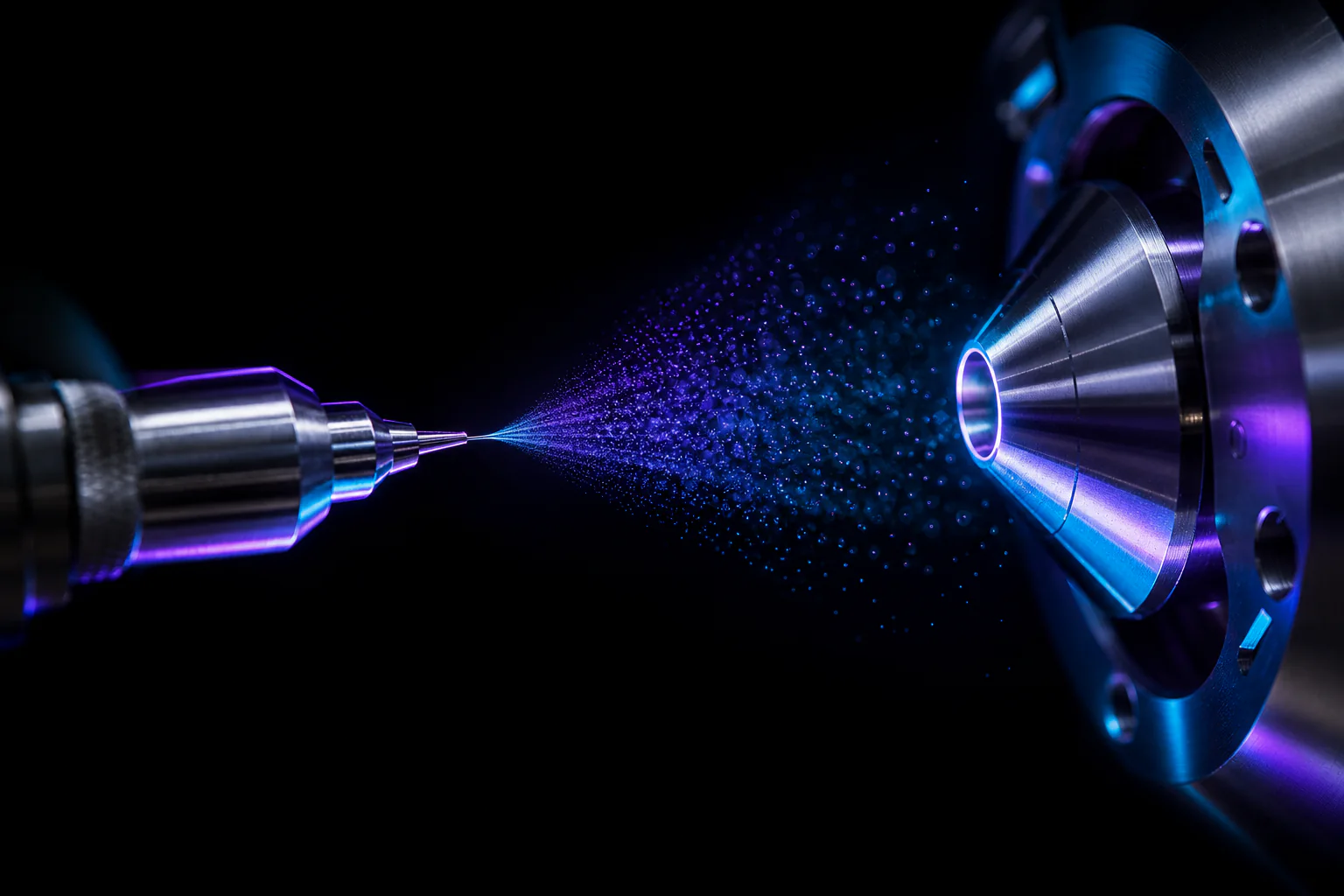
Macro view of a mass spectrometer electrospray ion source: a fine emitter needle releases a charged microdroplet plume toward the sampling cone, lit in violet and cyan

Measuring the moving target

Disordered proteins never stand still. We map their dynamics, reveal transient pockets, and design small-molecule drug candidates to target them.

A shared evidence loop generates small-molecule drug candidates against disordered targets across oncology, immunology and inflammation, and CNS

Metastatic castration-resistant prostate cancer

AR-NTD

Shuts down androgen receptor signalling that current therapies leave intact.

MYC-driven solid tumors

c-Myc

Engages a transcription factor long considered undruggable.

TDP-43 proteinopathy in ALS and frontotemporal dementia

TDP-43

Holds the disordered low-complexity domain in soluble, aggregation-resistant states.