Peptone closes $40 million Series A led by F-Prime and Bessemer Venture Partners
Peptone raised a $40 million Series A to expand its Bellinzona research facility, advance its supercomputing capabilities, and develop therapeutics against intrinsically disordered proteins
LONDON. Peptone completed a $40 million Series A financing round to expand its work on complex intrinsically disordered protein structures and advance a new class of potential therapeutic targets.
F-Prime Capital and Bessemer Venture Partners led the round, with participation from Walden Catalyst Ventures and existing investors Hoxton Ventures and dRX Capital, the venture arm of Novartis.
“Disordered proteins operate right at the point where physics becomes biology,” said Peptone co-founder and CEO Dr. Kamil Tamiola. “By taking a rigorous and computer-driven experimental physics approach to analyzing proteins, we can go beyond classical drug discovery approaches and observe protein behavior that algorithms like AlphaFold cannot.”
Expanding experimental and computational research
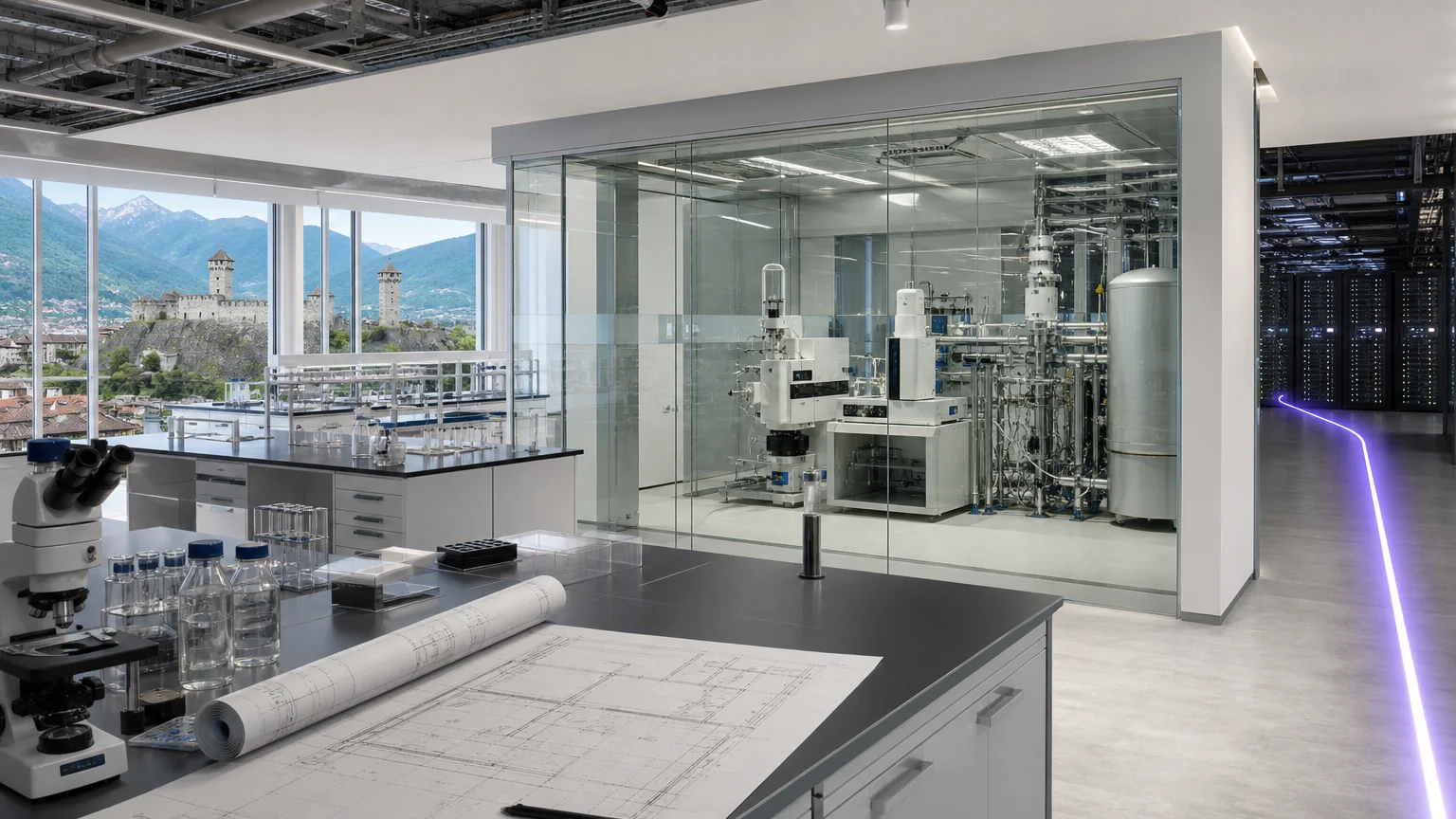
The investment supports a research facility in Bellinzona, an emerging biotechnology cluster in southern Switzerland. The site brings together Peptone’s atomistic experiments and supercomputing technology, helping the company advance its own pipeline across disease areas including inflammation, cancer, and diabetes.
The financing also supports Peptone’s Oppenheimer Product Engine, which runs on a supercomputer developed with NVIDIA in Keflavik, Iceland. The system is powered by geothermal and hydroelectric renewable energy.
Many proteins in the human body contain regions that do not fold into a fixed structure. Because those regions cannot be described accurately from genetic sequence alone, drug programs directed at them can struggle when they rely on rigid structural models.
Peptone combines nuclear magnetic resonance spectroscopy and hydrogen-deuterium exchange mass spectrometry with machine learning and supercomputing to represent the behavior of disordered proteins. Its technology had already been tested through collaborations with major pharmaceutical companies, including work on partially disordered protein-based drug candidates.
Investor perspectives
Andrew Hedin, Partner at Bessemer Venture Partners, said Peptone’s computational physics approach stood out for its ability to describe the structural dynamics of difficult-to-drug proteins. Alex Pasteur, Partner at F-Prime Capital, highlighted the combination of experimental accuracy and efficient in silico modelling.
“Computational drug discovery is resurgent, but the missing piece is how to understand disordered proteins. We believe Peptone could be the key to completing this puzzle,” said Francis Ho, Partner at Walden Catalyst Ventures.