Peptone presents ProteinMPNN-ddG at NeurIPS 2024
Peptone's AI team presented ProteinMPNN-ddG, a faster method for estimating how point mutations change the stability of monomeric and multimeric proteins
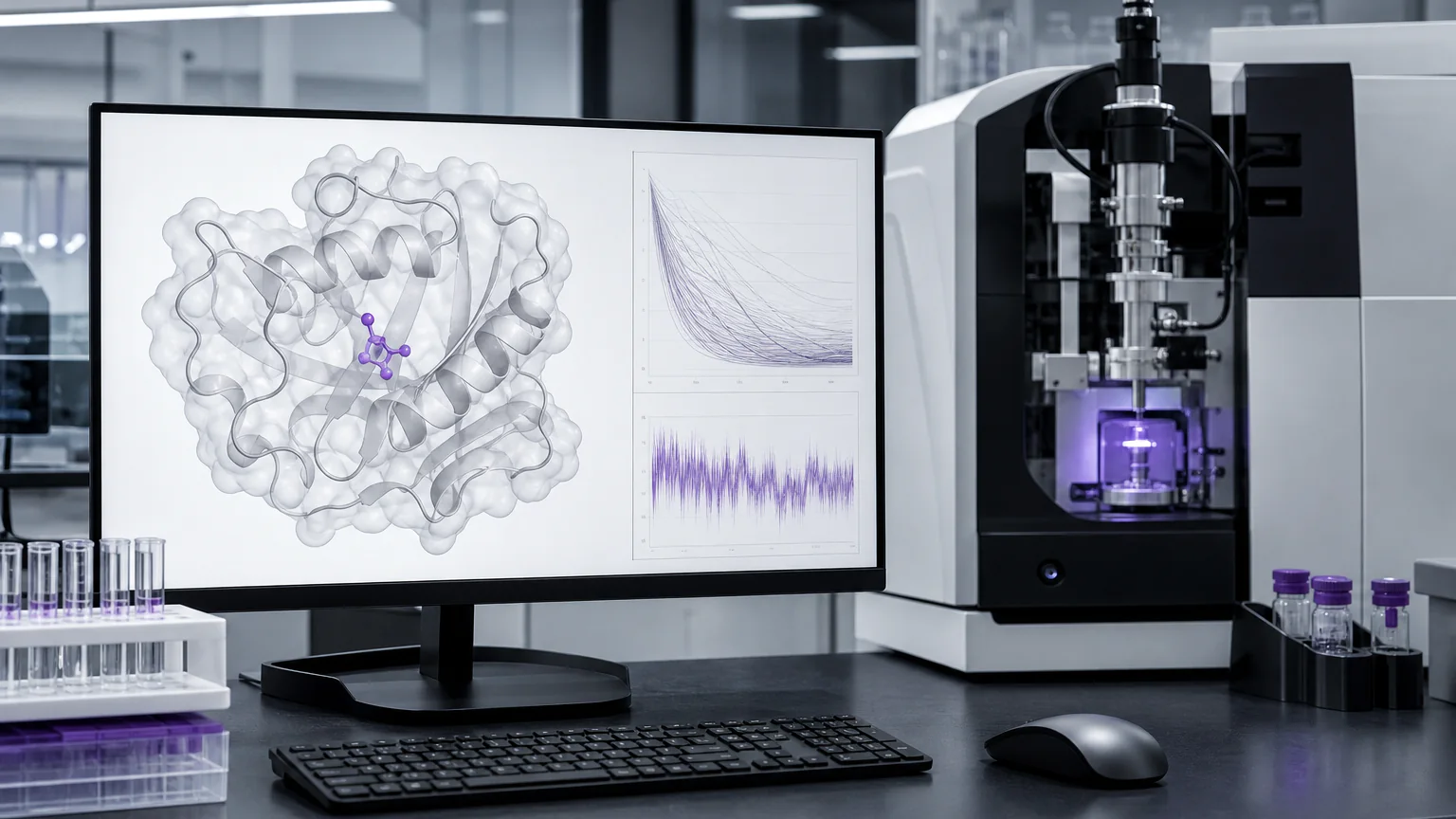
Peptone’s AI team, led by Carlo Fisicaro and Michele Invernizzi, presented ProteinMPNN-ddG at NeurIPS 2024. The method estimates how point mutations change protein stability in both monomeric and multimeric proteins.
Extending ProteinMPNN
The team enhanced ProteinMPNN, developed by the Institute for Protein Design at the University of Washington, by adding a term derived from the model itself. For that term, only the backbone atoms of the residue being predicted are provided, without sequence or structural context. The setup is analogous to standard classical free-energy calculations.
Peptone also introduced a tied decoding scheme that incorporates full sequence context while reducing time complexity from O(N^2) to O(N log N).
This speed improvement makes it practical to identify mutations that affect protein stability across the proteome. Combined with a high-performance parser parallelized on NVIDIA GPUs, the implementation is designed to process these calculations rapidly at scale.