Product Engine
Experimental evidence and computation in one discovery loop
We measure disordered proteins in motion, resolve the shapes they move through, and design small-molecule drug candidates against transient pockets.

Measurement, modeling, design, and validation in one Product Engine
Each stage of discovery hands the next one evidence rather than assumption. Measurement reads a disordered protein directly in solution, enhanced sampling resolves the rare states where a binding pocket opens, and generative models propose molecules against those states, with the laboratory testing every prediction.
That closed loop makes disordered targets tractable. There is no fixed structure to lock onto, so experiment and computation share one evidence layer and stay in step, from the first measurement to a candidate at the bench.
What holds true across every program
The same commitments carry from the first measurement to the molecule we test in the laboratory.
- Measured in solution, not forced into a crystal
- Described as ensembles, not single structures
- Rare binding-competent states resolved, not averaged away
- Designs treated as hypotheses, tested at the bench
- One shared evidence layer across experiment and computation
- Proprietary ensemble and assay data that compounds across programs
From the first measurement to the bench
-

Measurement
Reading a shape-shifting protein directly in solution, fast enough to catch structure that lasts only milliseconds.
-
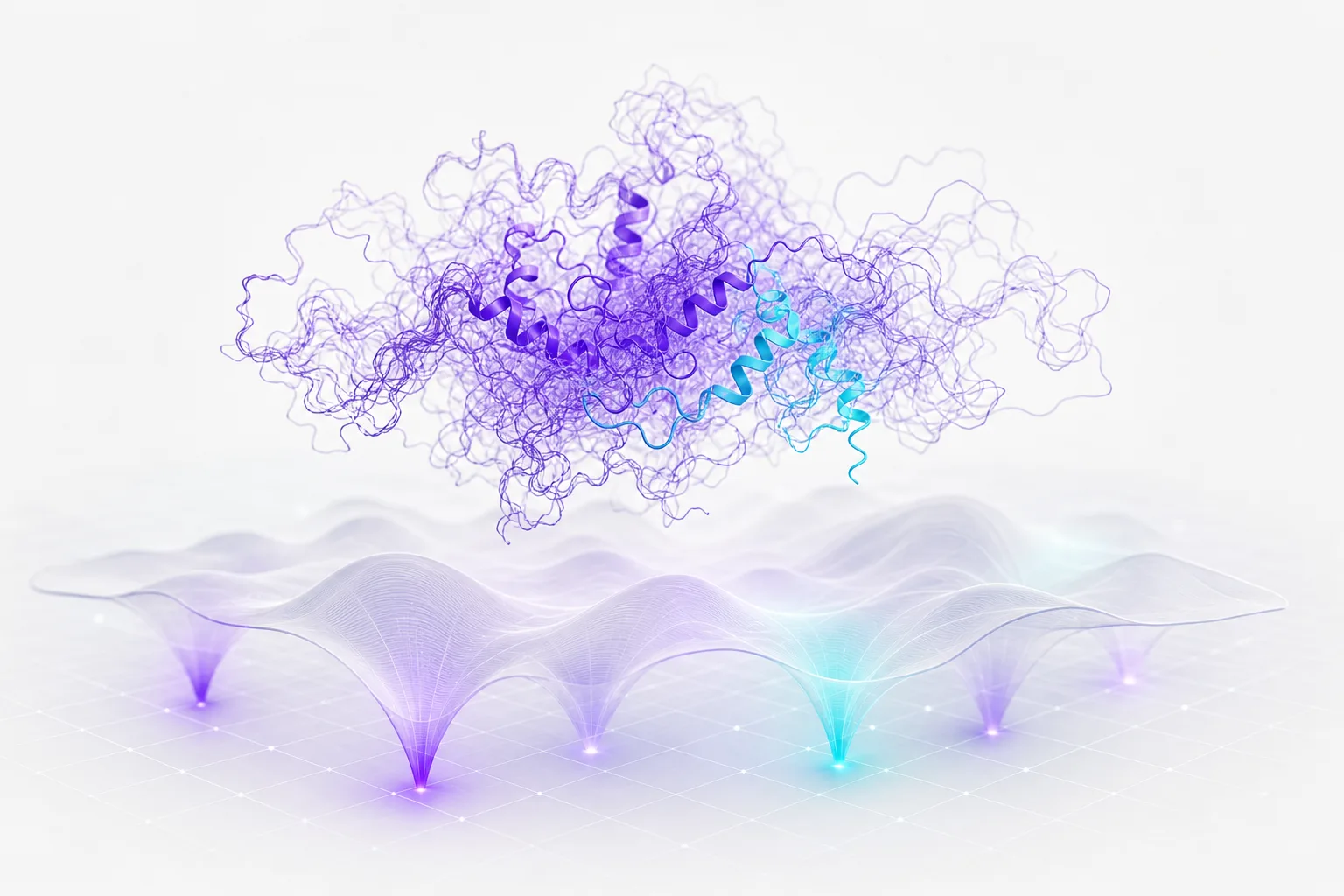
Modeling
Rebuilding the full range of shapes a protein moves through, so rare states and hidden pockets come into view.
-
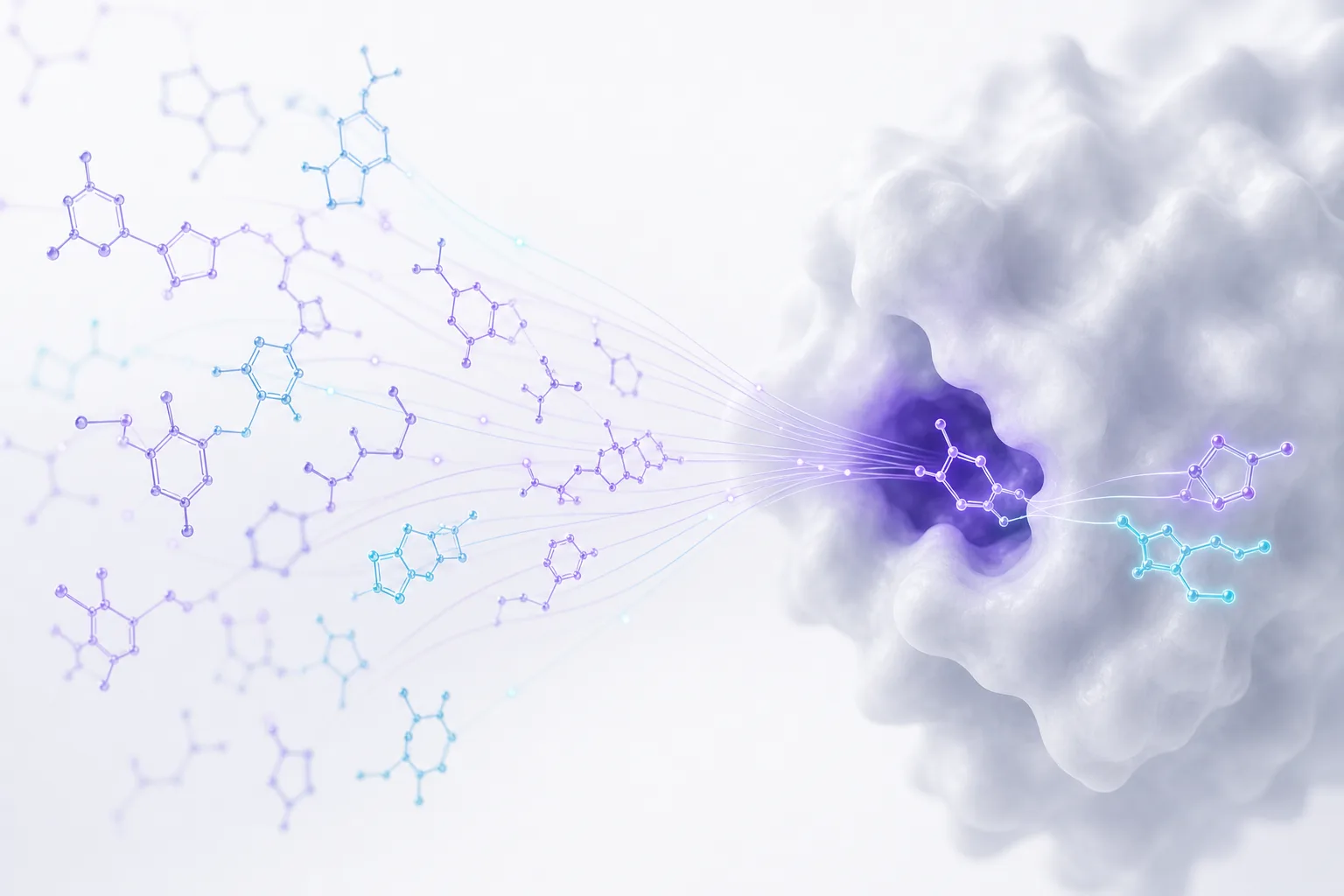
Design
Designing against fleeting pockets, confirming ligand-dependent protection by HDX-MS, then testing whether that molecular effect produces useful biology.
-

Validation
Testing every prediction in the laboratory, so the Product Engine stays answerable to real measurements.