Measurement

Reading a shape-shifting protein directly in solution, fast enough to catch structure that lasts only milliseconds.

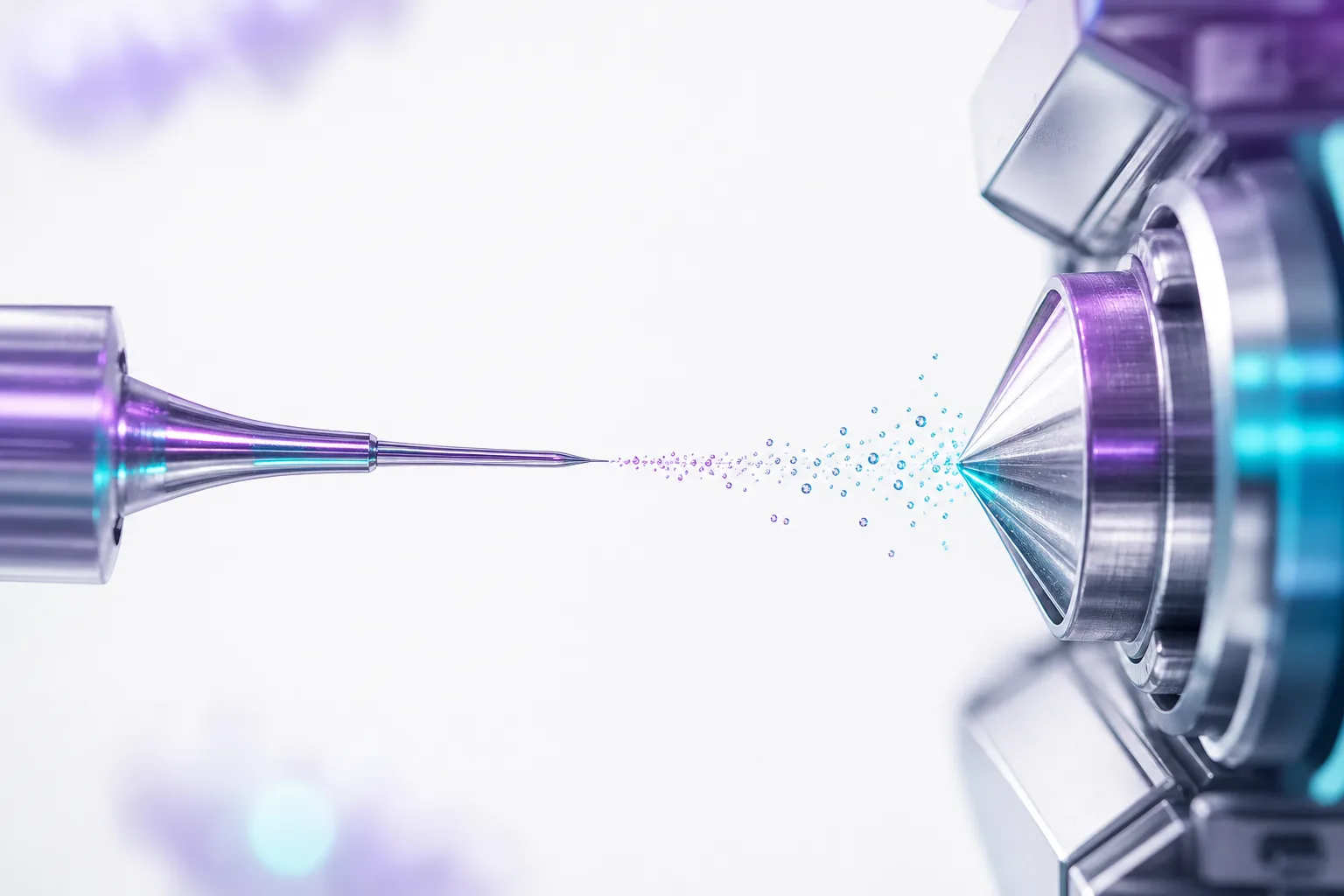
A fine emitter needle releasing a charged microdroplet plume toward a sampling cone, a mass-spectrometry ion source rendered as a high-key macro in violet and cyan on a pale background. Illustrative generated image.
Introduction

What if we could see structural states that no conventional experiment or frontier AI model can resolve?

The most consequential states in a disordered protein are often the hardest to observe. They emerge at low population, open a binding pocket for only milliseconds, then disappear into the ensemble. Conventional experiments average over that motion, while AI models cannot recover states that the available evidence does not constrain.

Ultra-fast hydrogen-deuterium exchange mass spectrometry turns that blind spot into a measurement. Exchange rates record which regions are exposed and which remain protected. By reading below 50 milliseconds, Peptone captures transient structural contrast before it washes out and converts it into residue-level constraints for ensemble modeling.

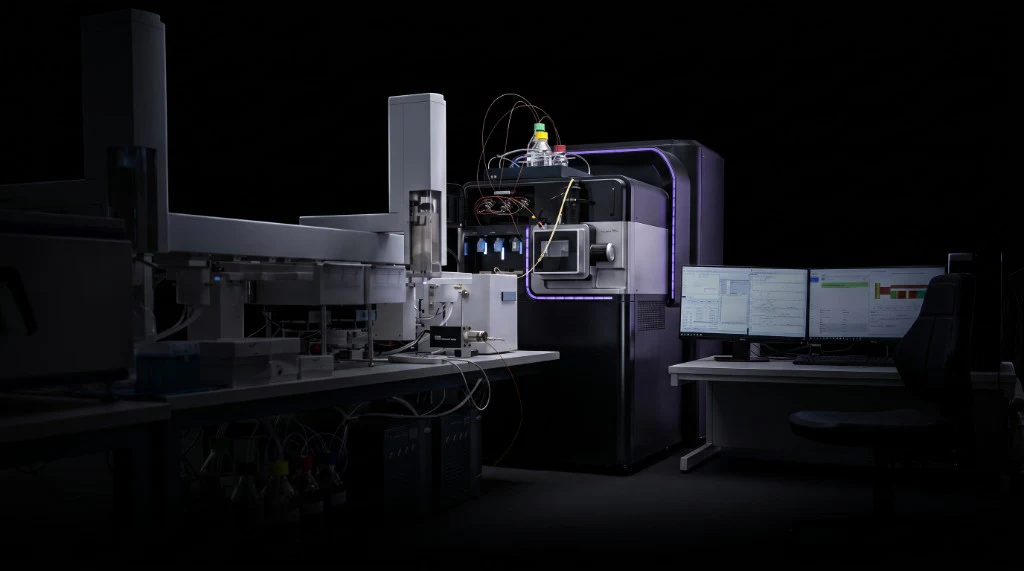
Peptone's HDX-MS system in a dark laboratory, with automated fluidics, the mass spectrometer, and dual analysis monitors.

We can. For the first time.

Ultra-fast mixing opens the sub-50-millisecond window, before transient protection disappears.

Ultra-fast HDX-MS captures structural states that conventional experiments and frontier AI models cannot resolve, before their signal disappears.
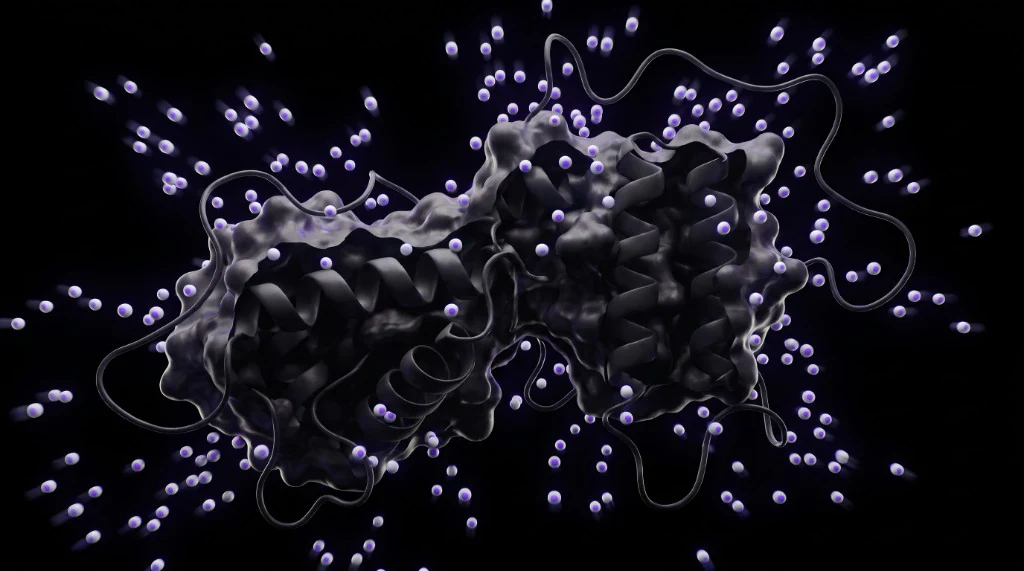
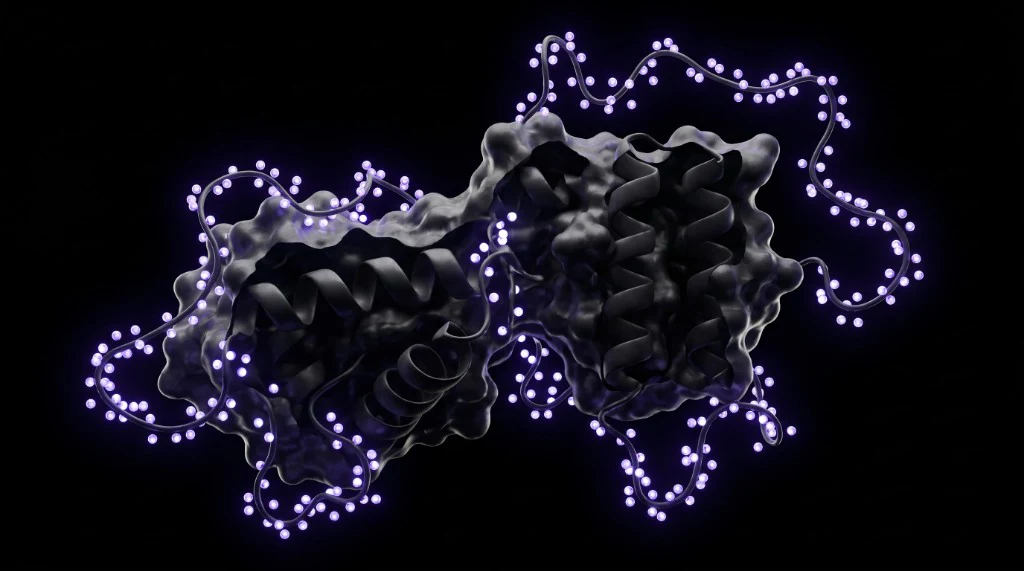
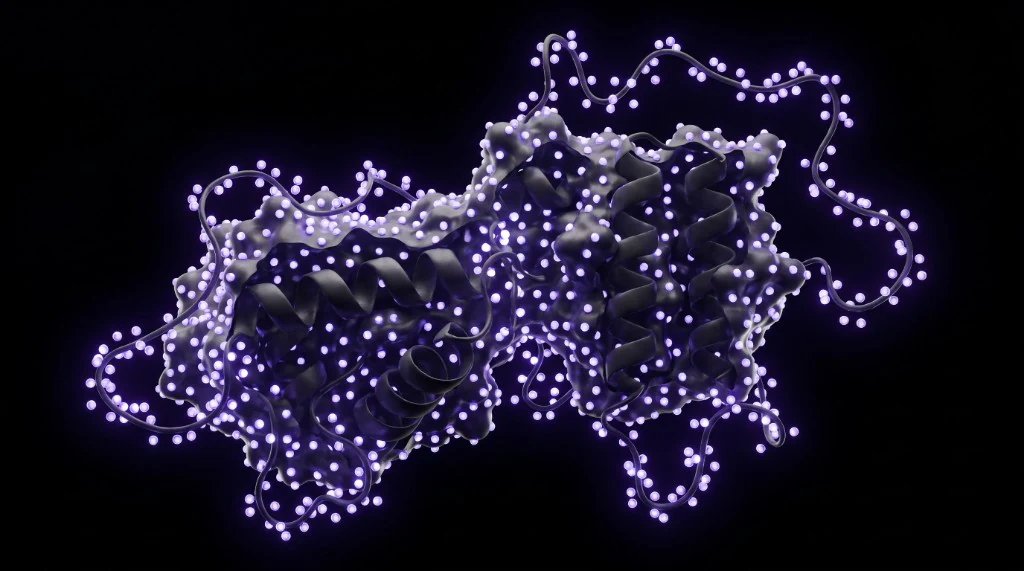
Illustrative molecular rendering of deuterium particles approaching a disordered protein in solution.

Read exchange from the first milliseconds.

Deuterium labels exposed amides first. Protected regions remain distinct only at the earliest time points.

Deuterium reaches the chain. Solvent-exposed backbone amides label first, while protected regions exchange more slowly.

Illustrative molecular rendering of deuterium labeling exposed loops while protected protein regions remain comparatively dark.

Preserve the contrast that reveals structure.

Ultra-fast sampling separates protected sites from exposed loops before their uptake profiles converge.

In the first milliseconds, local structure shields some amides while neighboring loops label. That difference is the structural signal.

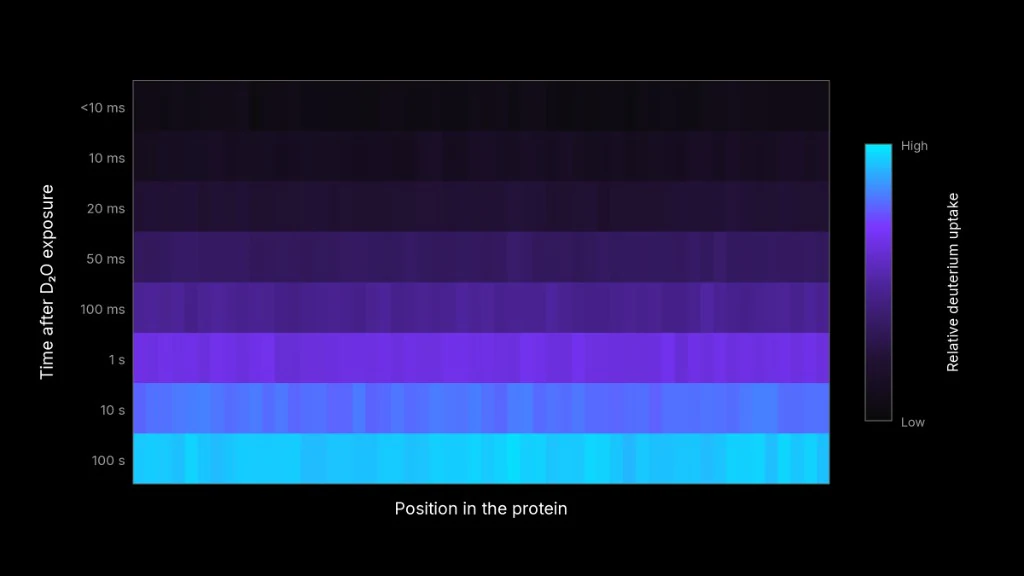
Heatmap of relative deuterium uptake across protein positions from under 10 milliseconds to 100 seconds, with nearly uniform bands at each time point.

Classical time points erase that contrast.

At seconds-scale reads, exchange has spread across the chain and transient structural differences are no longer distinguishable.

At seconds-scale time points, deuterium has spread across the chain. Transient protection washes out and distinct regions look alike.

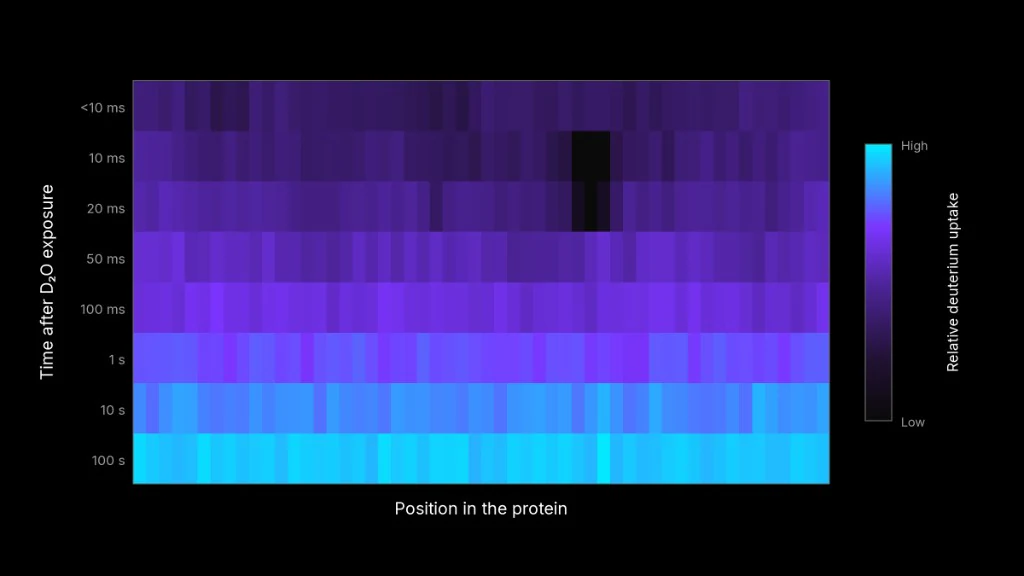
Heatmap of relative deuterium uptake with heterogeneous early-time patterns revealing position-specific protected states below 100 milliseconds.

Measure up to 10,000× earlier.

Peptone reads below 10 ms versus a 100 s measurement, while position-specific protection remains measurable.

Peptone measures below 10 milliseconds while position-specific protection still separates one conformation from another.

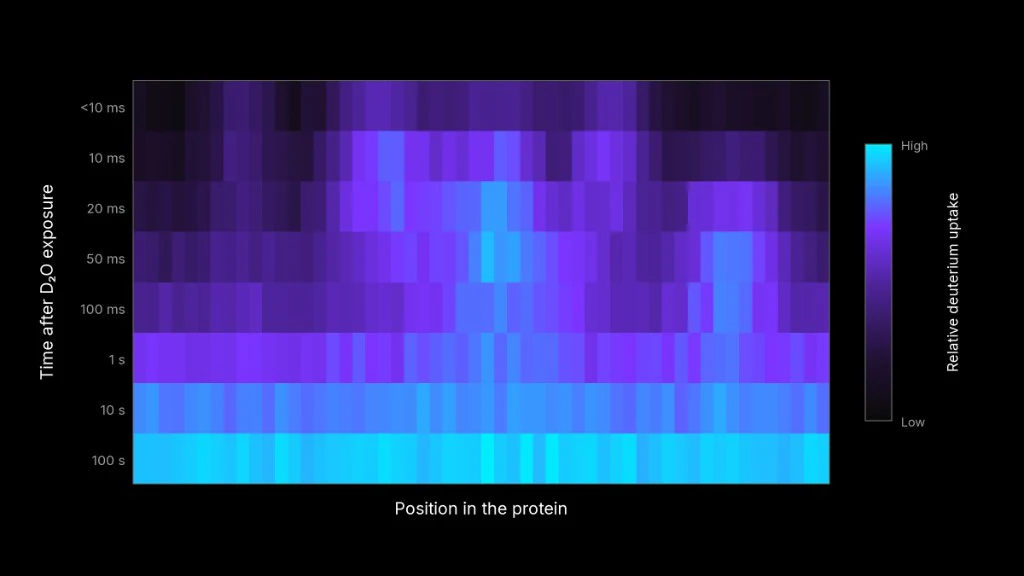
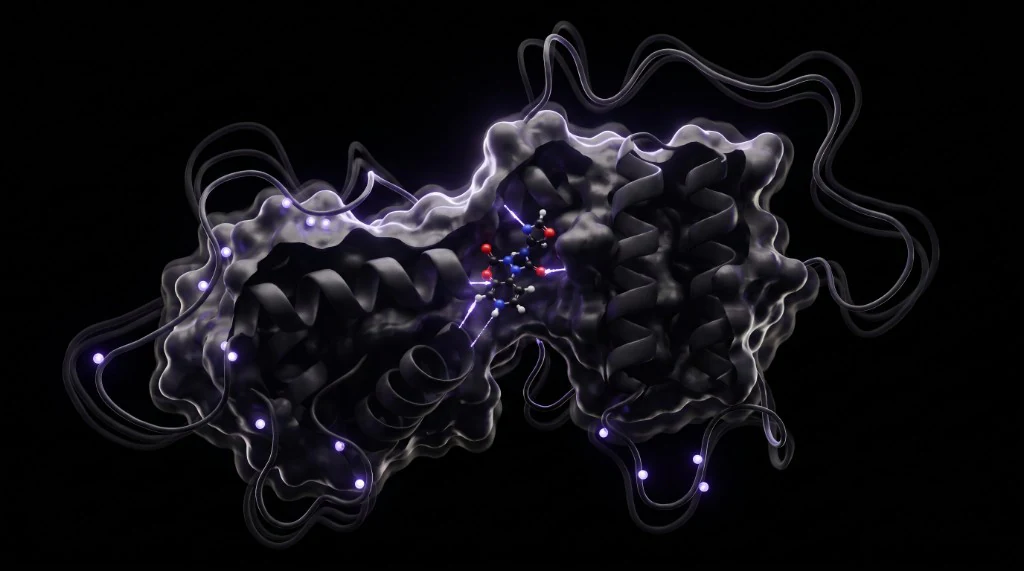
Illustrative molecular rendering of a transient ligand-binding pocket with only a few protected sites remaining visible.

Resolve pockets that exist for milliseconds.

A binding-competent conformation remains visible at 20 ms and becomes a quantitative constraint for ensemble modeling.

The short-time protection pattern becomes a quantitative structural constraint for ensemble modeling.

Heatmap of relative deuterium uptake across protein positions from under 10 milliseconds to 100 seconds, with nearly uniform bands at each time point.

Classical HDX-MS

Seconds

Transient protection has washed out.

Heatmap of relative deuterium uptake with heterogeneous early-time patterns revealing position-specific protected states below 100 milliseconds.

Ultra-fast HDX-MS

Below 50 ms

Position-specific protection remains visible.

Earlier measurement preserves hidden states.

The exchange chemistry is unchanged. The advantage is reading it before structural contrast washes out.

Earlier measurement preserves the contrast needed to resolve hidden states.

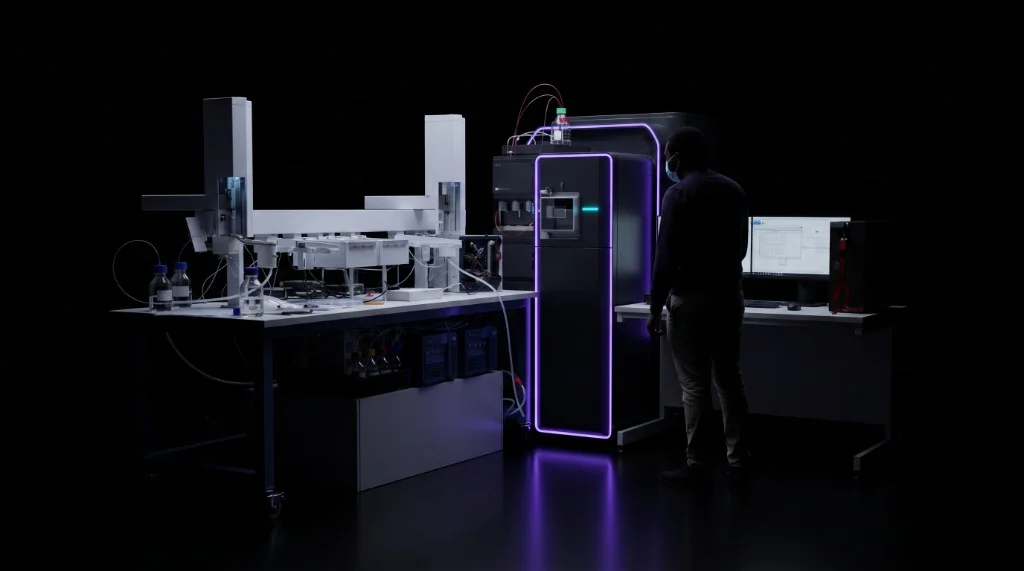
Peptone's integrated HDX-MS development system in a dark laboratory, with automated sample handling, an illuminated instrument enclosure, and a scientist at the control station.

The next frontier is in-cell measurement.

Proudly made in Switzerland

We are continuously evolving our HDX-MS capabilities and developing an integrated system designed to enable in-cell measurements of proteins in their biological context.

At a glance

  • Residue-level readout of protection and exposure across the full sequence
  • Sub-fifty-millisecond time resolution from continuous-flow ultra-fast mixing
  • Sensitivity to transient, low-population states that conventional HDX-MS cannot resolve
  • Direct measurement in solution, with no crystal or fixed structure required
  • Constraints that feed ensemble modeling rather than a single static model
  • A shared evidence layer that keeps computation and experiment in one loop